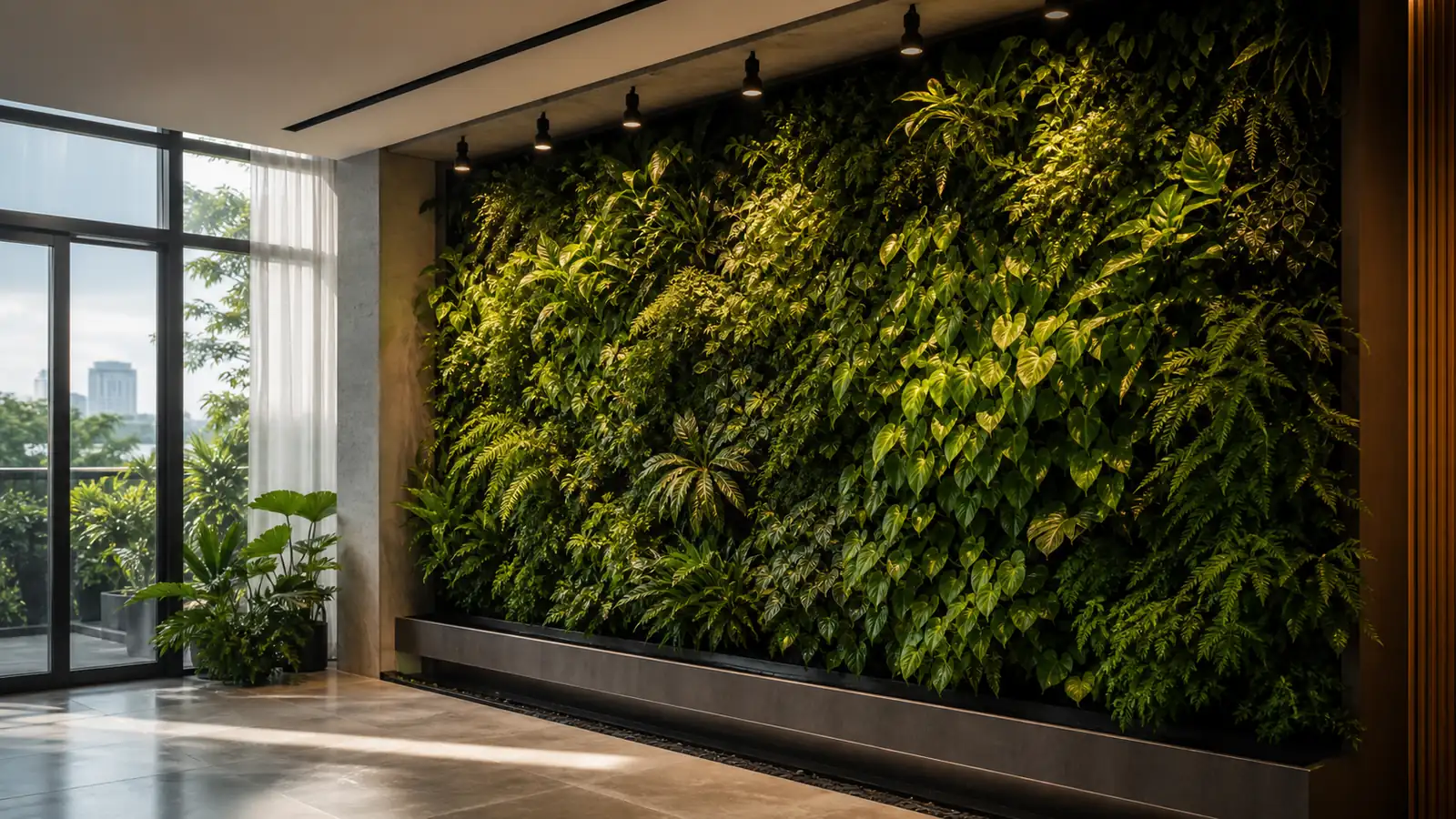
Living plants still need photosynthesis on a wall. A room that looks bright to a person may remain too dark for plants, especially when curtains, overhangs, or neighboring buildings cut the light after a few hours. Measure the real light period, then choose plants and supplemental lighting for the darkest part of the surface.
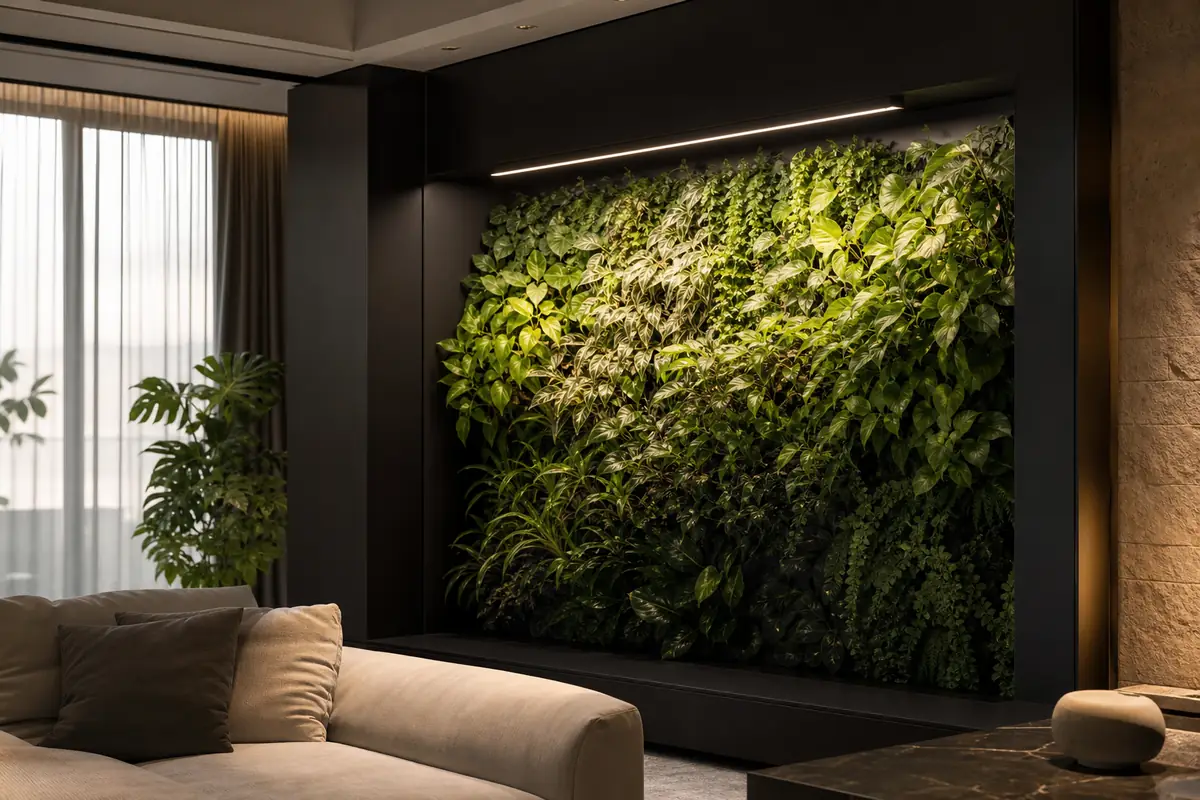
Balcony Direction Decides the Plant Palette
Morning sun allows more options than hot afternoon sun. In a lightwell, the top often receives stronger light than the base, so one wall may need two plant groups.
Leaves reveal exposure errors. Under low light they stretch and pale; under excessive sun their edges scorch and new leaves drop.
Aim Indoor Grow Lights at the Foliage
Plant lighting needs to reach the foliage without shining into a seated person’s eyes. Distance, angle, and operating time affect plant form. A lamp too close creates a hot zone; one too far away leaves the plants underlit.
Give the grow light its own schedule. When it shares a switch with decorative lighting, plants lose hours on weekends or quiet days.
Shade Plants Still Need Light Indoors
Shade-tolerant does not mean suitable for a dark room. These plants accept indirect light, need stable moisture, and dislike hot airflow. In a closed corridor, reducing the living area or combining plants with preserved moss or artificial foliage may set a more realistic operating requirement.
Plan light before irrigation. More water cannot correct insufficient light.
Stable Lighting Can Reduce Replacement
Consistent lighting helps foliage hold its form and reduces replacement in dark zones. It cannot correct a poor plant palette or compact growing medium. Light, water, and drainage still need to work together.
A low-maintenance plant remains dependent on suitable light. A durable plant in gentle light can become difficult in a dark corner.
Measure Light the Way Plants Use It
Lux and lumens describe brightness as the human eye registers it. Plants respond to PPFD at the leaf surface and to DLI across the day — a distinction Tường Cây SG uses when reading plant light. Minnesota’s working range for indoor foliage is roughly 50–150 µmol·m⁻²·s⁻¹ for low light and 150–250 for medium, with supplementary lighting usually run around 12–14 hours a day and a dark period preserved in every 24-hour cycle. Running a lamp continuously does not compensate for a dark position.
How to Read Light for a Green Wall
| Real light hours | Count the hours leaves receive light, not whether the room looks bright. |
|---|---|
| Darkest point | Choose plants for the weakest zone, not the best-looking one. |
| Supplemental light | Aim light at foliage without shining into seated eyes. |
| Dark period | Plants still need a light-dark rhythm, not all-day lighting. |
Frequently Asked Questions
Is ordinary room lighting enough?
Usually not when the fixture is designed only for people. Plants need suitable intensity, direction, and consistent operating time.
Does low light kill plants immediately?
No. They usually pale, stretch, shed leaves, and lose density before dying.
Should a closed room use living plants?
It can when plant lighting, clean irrigation, and a shade-tolerant palette are planned. Otherwise, consider preserved moss or artificial foliage.
What We’ve Already Worked Out
The worry: not knowing whether your position carries enough light, and fearing the planting will thin out after a few months.
What we fixed in advance: the three decor packages are outdoor balcony packages, chosen because an apartment balcony has natural light steady enough to remove the lighting question. The Tropical plant list is adjusted to the real light of your balcony, including the split between upper and lower rows.
Which package covers it: all three decor packages — Standard 2m² 12,500,000đ, Verdant 4m² 28,500,000đ, Evergreen 4m² 43,500,000đ. You choose area and maintenance level, not plants by lux reading.
What still needs a look: an interior wall needs a grow light at 900,000đ/m² and sits outside the three balcony packages.